Read Your Five Documents
Every bid comes with the same five documents. Here's what's in each, and where to look first.
Cost estimate
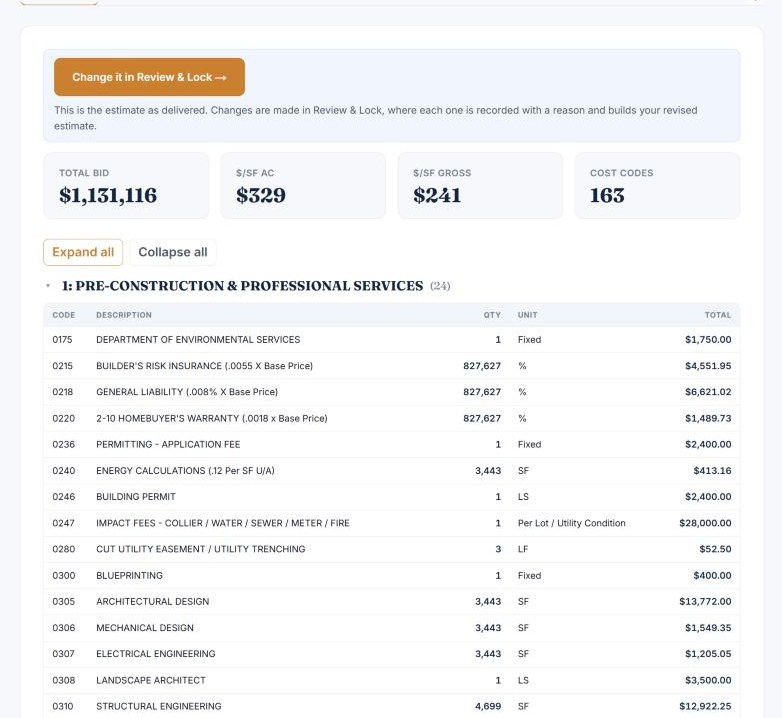
- Every cost code, grouped by phase in build order: code, description, quantity, unit, total.
- Expand all or Collapse all to scan by phase.
- At the bottom: subtotal, contingency, builder's fee, oversight and the total construction cost estimate.
- This tab is the estimate as delivered. To change a number, click Change it in Review & Lock →. Every change gets a reason and builds a revised estimate next to the original.
Quantity takeoff
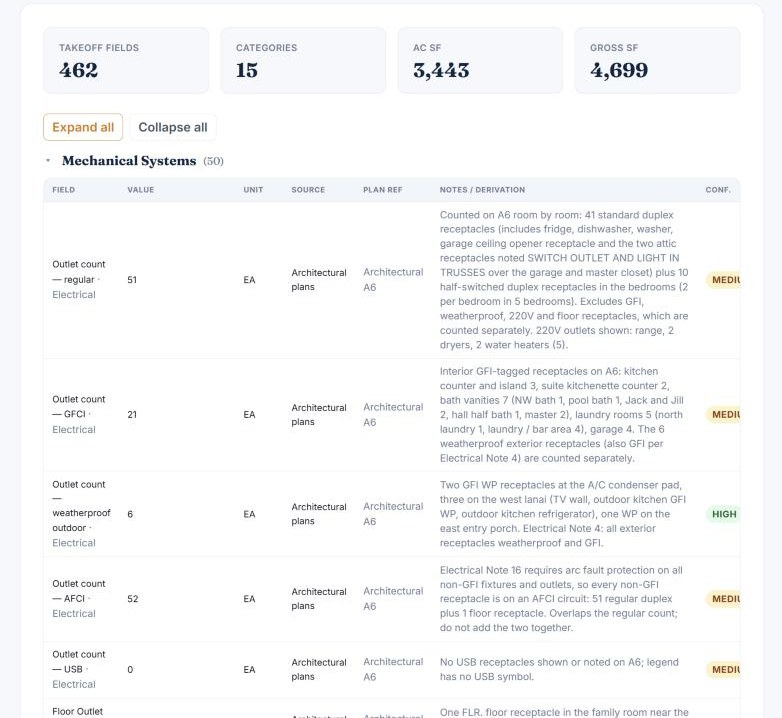
Every measured or counted item, grouped by category, with:
- Source and Plan ref: the sheet it came from.
- Notes / derivation: how it was counted, in plain English.
- Confidence: High, Medium or Low.
Start with the Low-confidence rows. They're where a quick look at the plans pays off most.
Scope of work
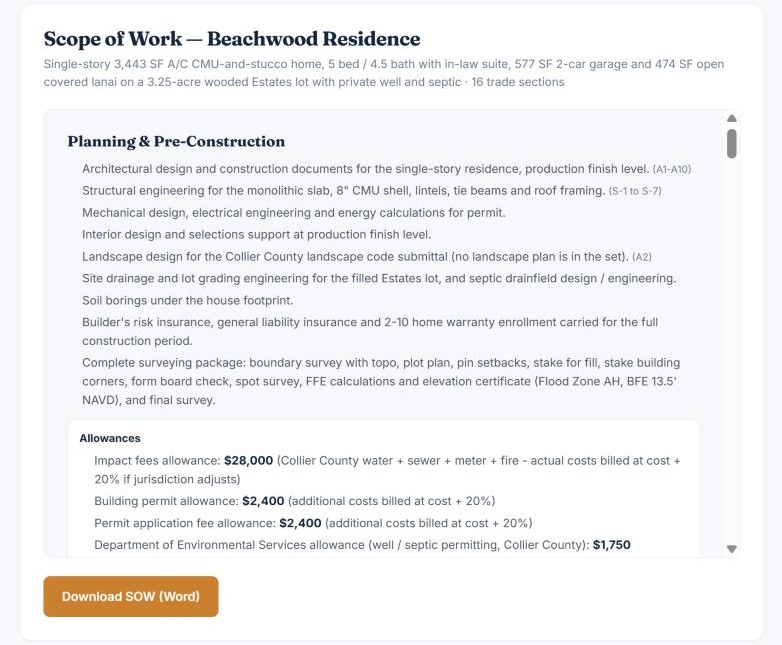
Trade-by-trade scope in build order, with sheet references and allowances spelled out. Click Download SOW (Word) for an editable copy to send to your client.
Conflict report
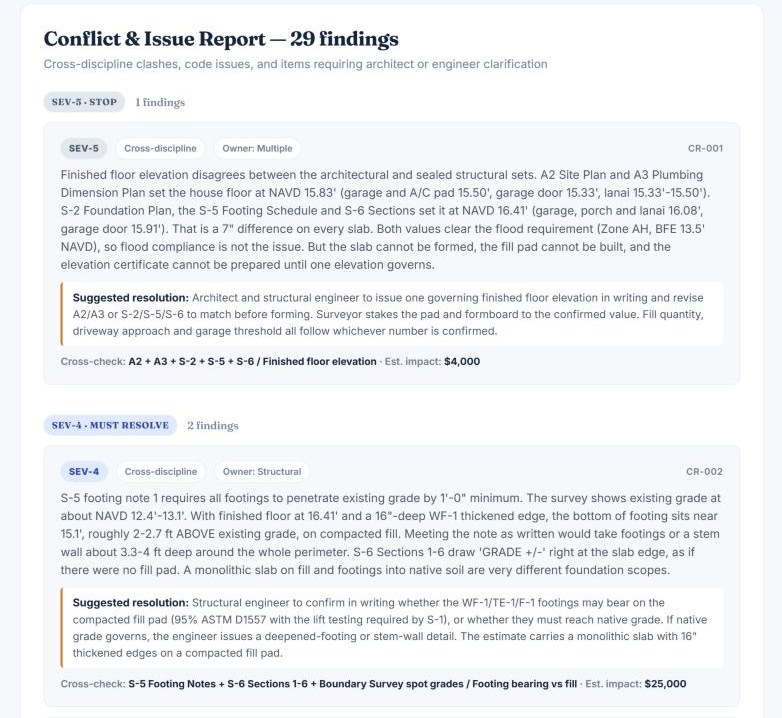
Problems in the plan set, sorted by severity:
- Sev-5 STOP: code violations or unbuildable conditions. Resolve before you price.
- Sev-4 Must resolve, Sev-3 Clarify, Sev-2 Watch, Sev-1 Info.
Each finding names the sheets involved, who owns the fix (architect, structural and so on), a suggested resolution and an estimated cost impact. Send the Word version to your architect as an RFI list.
Verification notes
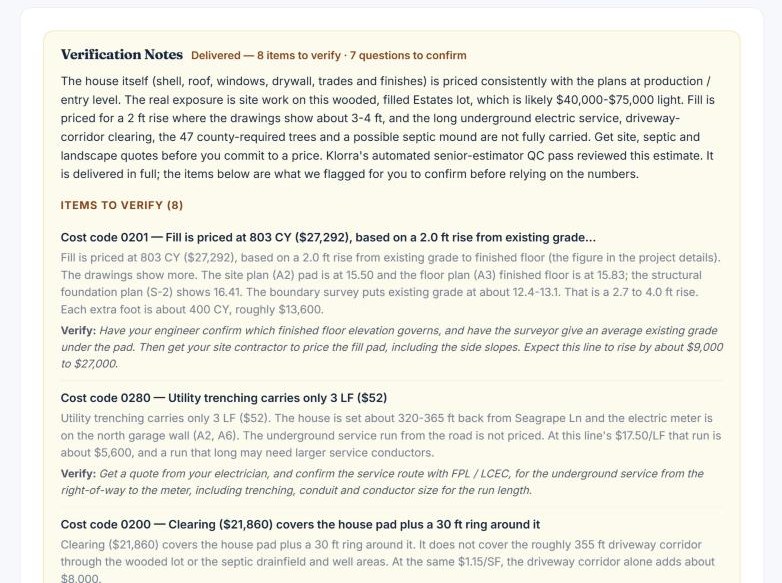
The automated QC pass's findings, written for you:
- A summary of where the estimate is solid and where it's exposed.
- Items to verify: specific cost codes, why they might be off, and exactly what to check.
- Questions to confirm with your team, and who to ask.
Read this before you send a number to anyone. It's the fastest way to find the lines that need your judgment.
Every bid is a budget your team verifies, not a bid you sign blind. Check the numbers against your own subs before anything goes to a client.
Next: Review & Lock.
Klorra deliverables are budgeting and planning tools, not warranted bids. Every quantity and rate is the builder's responsibility to verify before commercial use. Terms §3.